
George Washington
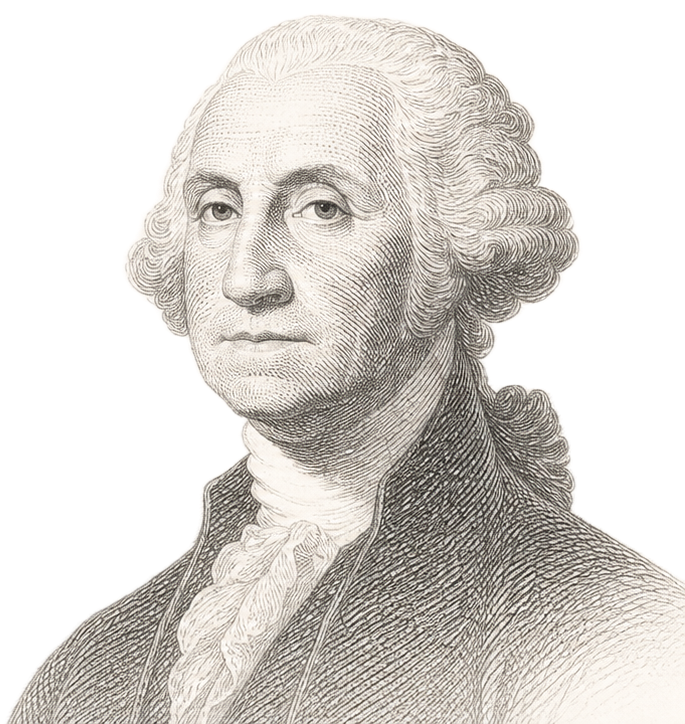

The important places connected with our nation’s 1st president.
February 22, 1732
Pope’s Creek, Virginia
December 14, 1799
Mount Vernon, Virginia


Born
Died


Term
Sites
20 Locations
7 States
April 30, 1789-
March 4, 1797
Jump to:
Birthplace | Early Life | Wedding | Personal | Military | Political | Death & Burial
Birthplace
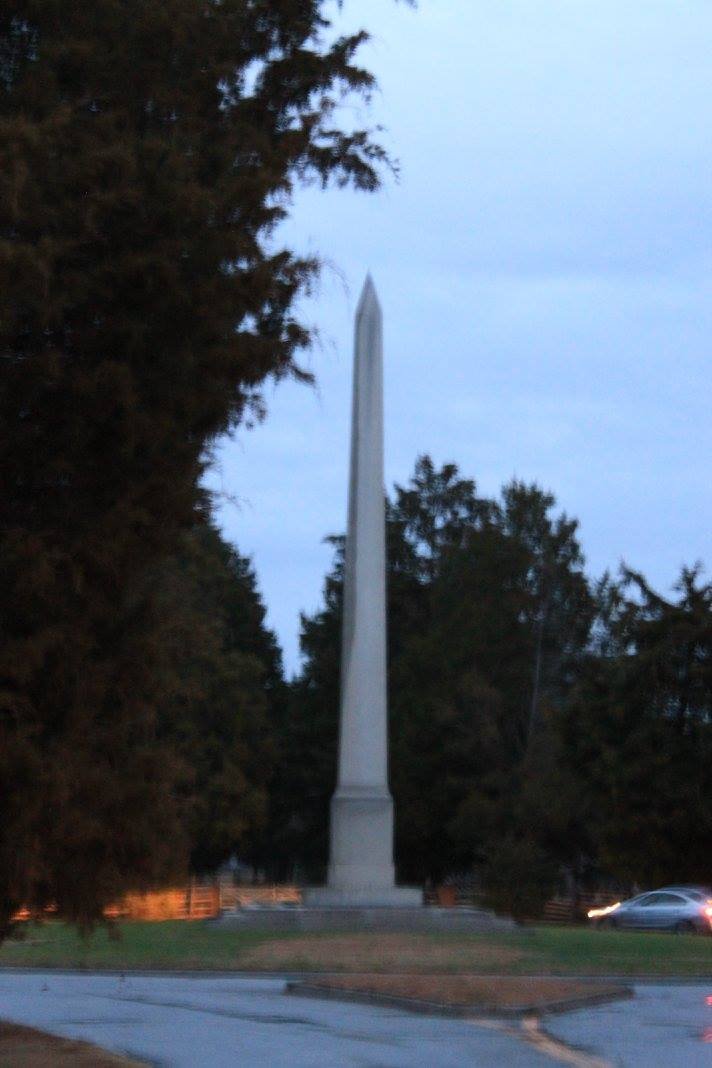
The birthplace monument at Pope's Creek.
Photo by Zach Anderson (2019).
George Washington Birthplace National Monument
George Washington Birthplace National Monument in Colonial Beach, Virginia, marks the site traditionally recognized as George Washington’s birthplace and preserves part of the historic Popes Creek plantation landscape.
Status: Open to the public; original house destroyed, replica built on the excavated foundation.
Residence dates: 1732-1735.
Hours: Grounds open daily, 9:00 AM–5:00 PM; visitor center hours vary seasonally.
Admission: Free.
George Washington was born here on February 22, 1732, while the Washington family lived at Popes Creek. The original house was later destroyed by fire, and the National Park Service now interprets the site with the Memorial House, Colonial Living Farm, and Washington family burial area.
Resources: Official Website | Historical Marker Database
Visited: Yes — multiple times, most recently in 2025.
Early Life
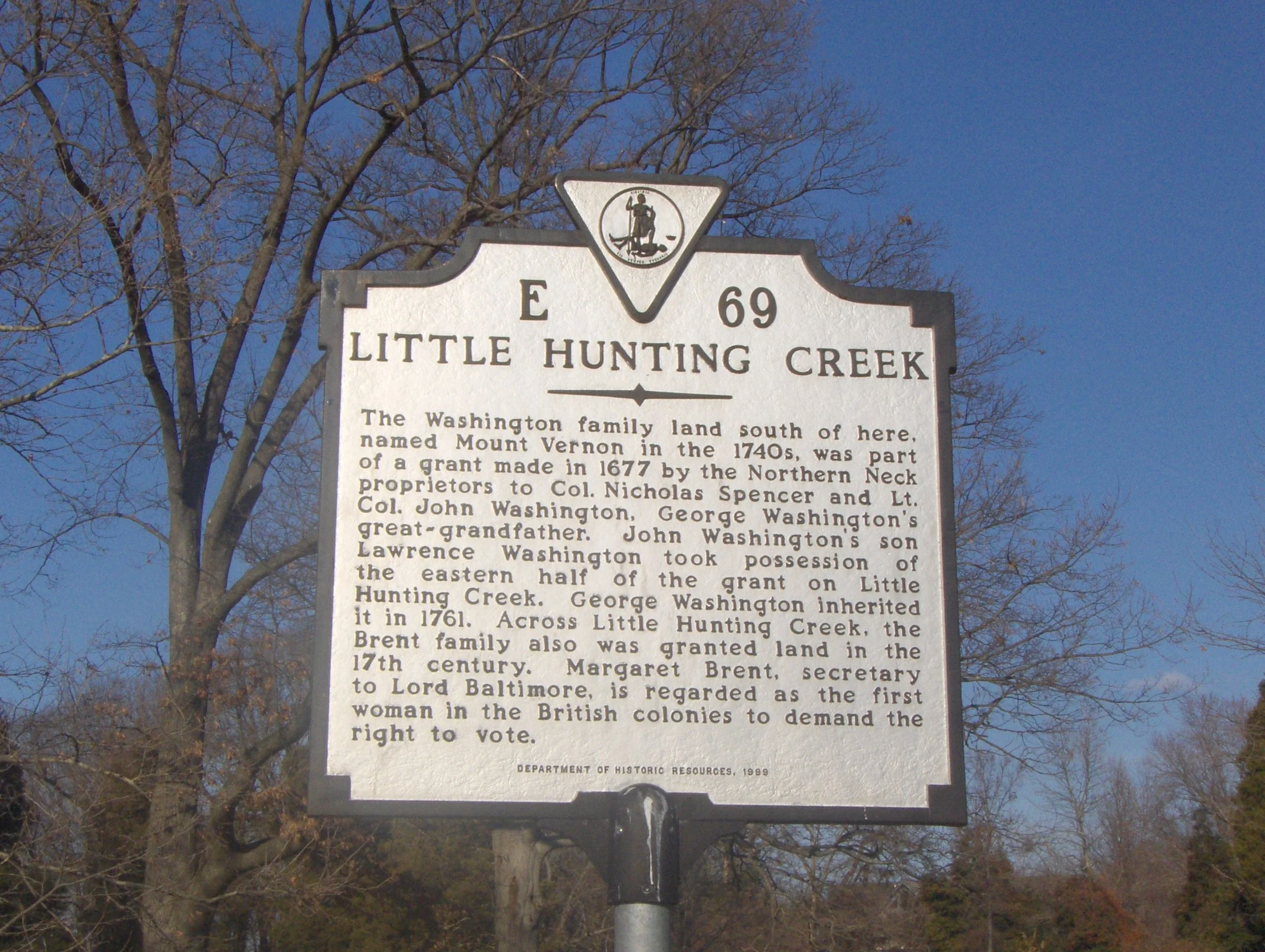
Little Hunting Creek's historical marker.
Photo By Roger Dean Meyer of Yankton, South Dakota., HMDB.org.
Little Hunting Creek (early Mount Vernon)
George Washington Birthplace National Monument in Colonial Beach, Virginia, marks the site traditionally recognized as George Washington’s birthplace and preserves part of the historic Popes Creek plantation landscape.
Hours: Grounds open daily, 9:00 AM–5:00 PM; visitor center hours vary seasonally.
Admission: Free.
George Washington was born here on February 22, 1732, while the Washington family lived at Popes Creek. The original house was later destroyed by fire, and the National Park Service now interprets the site with the Memorial House, Colonial Living Farm, and Washington family burial area.
Resources: Official Website | Historical Marker Database
Visited: Yes — multiple times, most recently in 2025.
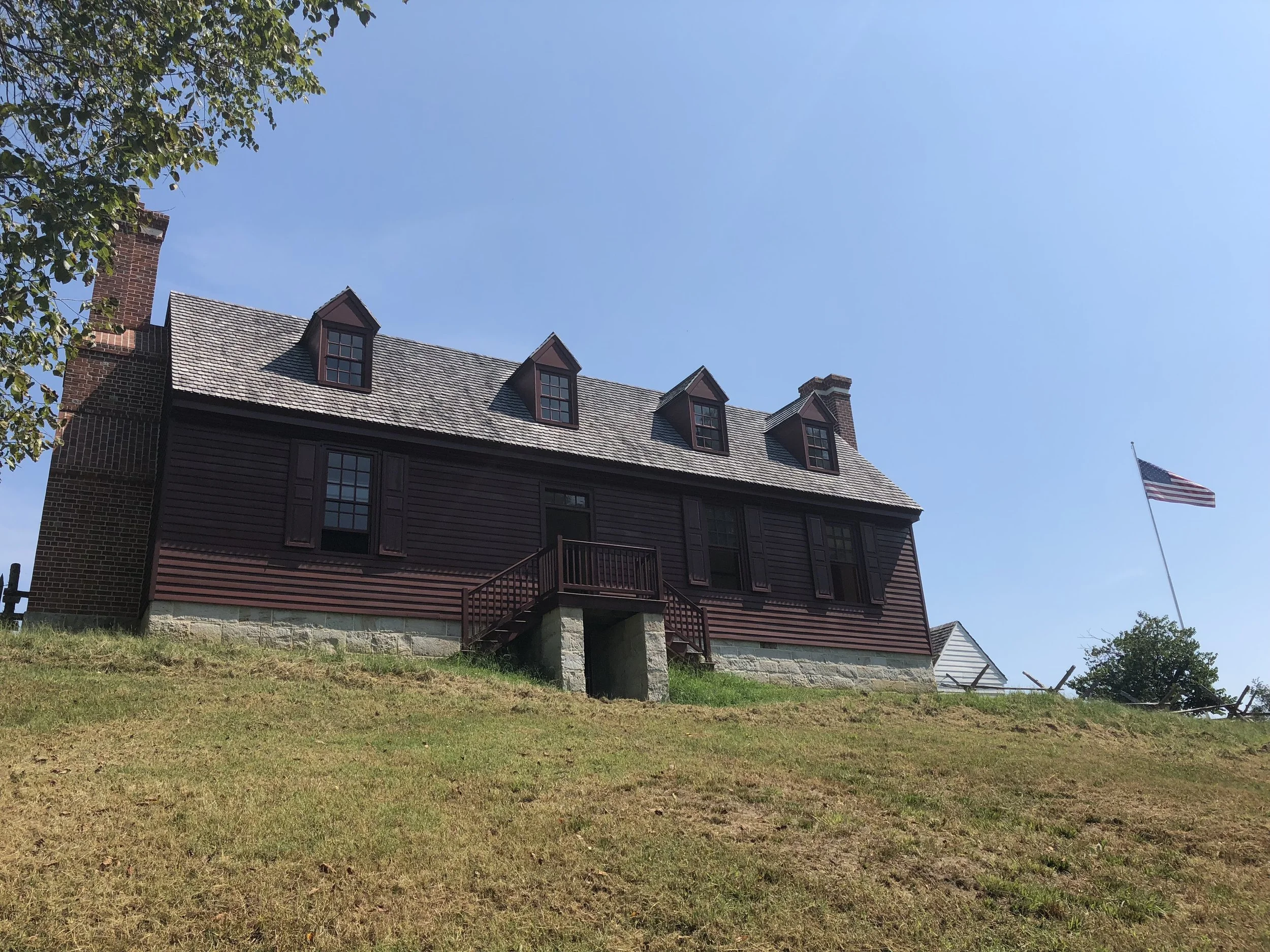
Ferry Farm.
Photo by Aamarcian, licensed under CC BY-SA 4.0.
Ferry Farm (George Washington’s Boyhood Home)
George Washington’s Ferry Farm in Stafford County, Virginia, preserves the landscape and reconstructed house where Washington spent much of his boyhood and young adulthood along the Rappahannock River.
Status: Open to the public; original house destroyed, replica built on the excavated foundation.
Residence dates: 1738–1750s.
Hours: March–October: Mon–Sat 10:00 AM–5:00 PM, Sun 12:00 PM–5:00 PM; November–December: Mon–Sat 10:00 AM–4:00 PM, Sun 12:00 PM–4:00 PM; closed January–February and major holidays.
Admission: Around $12 (adults) and $6 (students), with guided house tours included.
The Washington family moved here from Little Hunting Creek in 1738, calling the property their “Home Farm” before it became known as Ferry Farm because of the nearby river crossing. George lived here through his formative years and inherited the farm after Augustine’s death, even as he spent increasing time at Mount Vernon; the current house is a carefully researched reconstruction built over the archaeological footprint uncovered in 2008.
Resources: Official Site | Historical Marker Database
Visited: Yes, in 2020.
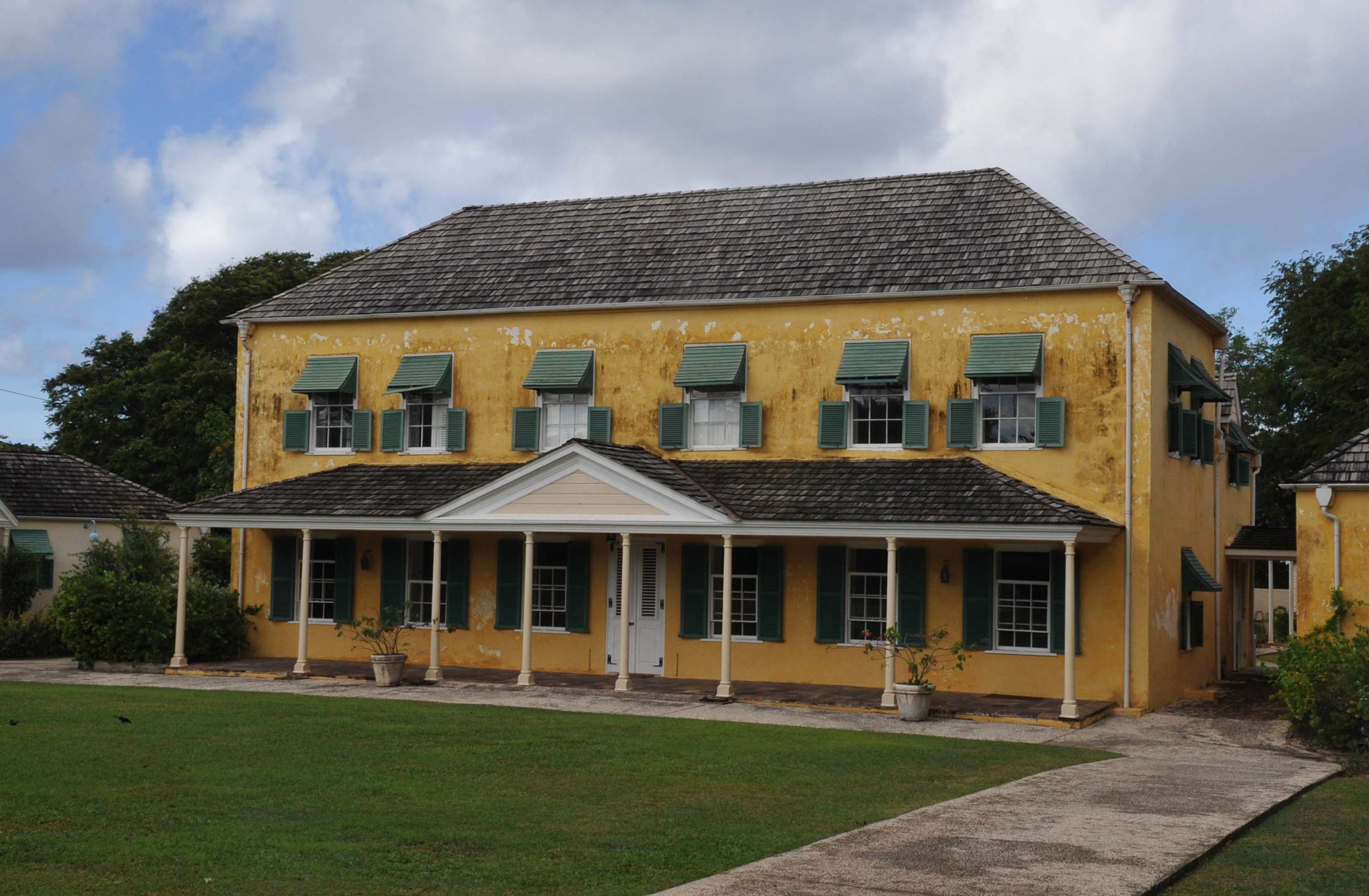
The George Washington House in Barbados.
Photo by Jerrye and Roy Klotz MD, licensed under CC BY-SA 3.0.
George Washington House (Barbados)
George Washington House in Bridgetown, Barbados, is the only place outside mainland North America where Washington is known to have lived, marking his brief Caribbean stay as a young man.
Status: Open to the public; restored 18th‑century plantation house and museum.
Residence dates: November–December 1751.
Hours: Monday–Friday, 9:00 AM–4:30 PM.
Admission: About $30 BBD (roughly $15 USD).
At age 19, Washington accompanied his half‑brother Lawrence to Barbados, where they rented this house on Bush Hill while seeking a healthier climate. During the two‑month stay, Washington contracted and survived smallpox, gaining immunity that would later prove crucial during wartime encampments; today the Barbados National Trust interprets the fully restored house and its Atlantic world context.
Resources: Official Website | Article
Visited: No (and unlikely to visit).
Wedding Venue

"The White House Mansion in 1862."
Photo by James F Gibson, photographer; Gardner & Gibson (1862).
White House Plantation
White House Plantation on the Pamunkey River in New Kent County, Virginia, was the estate where Martha Dandridge Custis lived before she married George Washington there in 1759.
Location: New Kent County, VA (site is private property; only a roadside marker is accessible).
Status: Original plantation house destroyed; marker and archaeological remains only.
Anniversary: January 6, 1759.
Martha’s first marriage to Daniel Parke Custis rooted her at this large tobacco plantation, and after his death she wed George Washington in the house’s parlor. Washington stayed several weeks afterward to help settle her affairs before bringing his new family to Mount Vernon; the mansion later burned in 1862 during the Civil War, leaving only a marker to note the site.
Resources: Historical Marker Database | Wikipedia
Visited: No.
Adult Residences: Personal Life
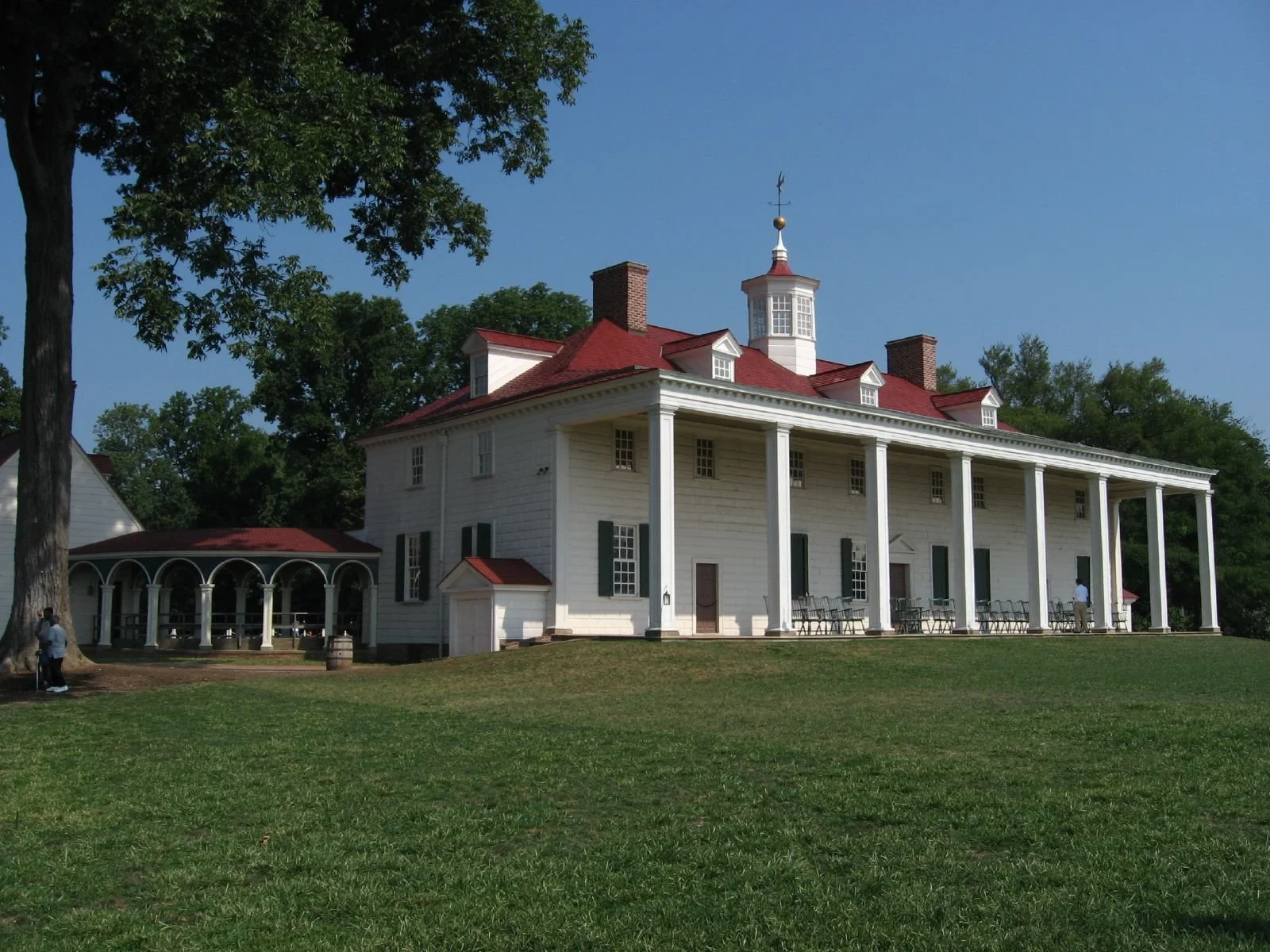
West face of the mansion, Mount Vernon, near Alexandria, Virginia.
Photo by Ken Lund, licensed under CC BY-SA 2.0.
Mount Vernon
Mount Vernon, overlooking the Potomac River in Virginia, was George Washington’s primary residence for 45 years and is the best‑known home associated with his life and legacy.
Address: 3200 Mount Vernon Memorial Hwy, Mount Vernon, VA 22121
Status: Open to the public year‑round.
Residence dates: 1754–1799 (with absences for military and presidential service).
Hours: Daily, 9:00 AM–5:00 PM (April–October); 9:00 AM–4:00 PM (November–March).
Admission: About $28 for adults at the gate; timed mansion tour tickets required.
Originally known as Little Hunting Creek, the property became “Mount Vernon” under Lawrence Washington and later passed to George, who secured full ownership in 1761. Over decades he transformed a modest house and farm into a 21‑room mansion and a plantation of more than 7,600 acres; since 1858 the Mount Vernon Ladies’ Association has preserved the estate as a historic site about 15 miles south of Washington, D.C.
Resources: Official Website | Historical Marker Database
Visited: Yes, in 2013.
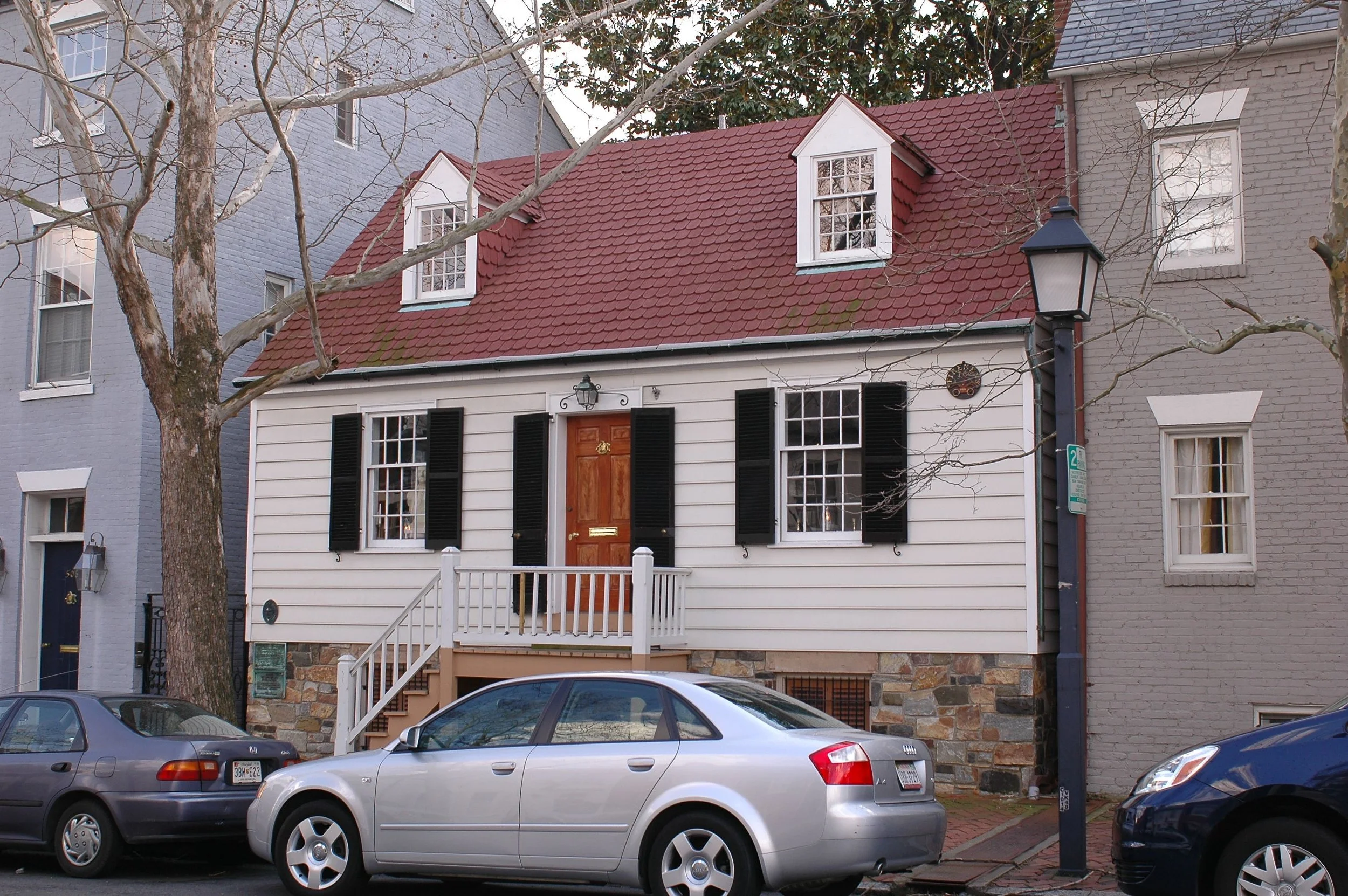
Washington's Alexandria town house.
Photo by Tom Fuchs of Greenbelt, Maryland, HMDB.org
Washington’s Town House
Washington’s Town House in Alexandria, Virginia, marks the site of the only urban house Washington built for his own use, serving as his in‑town base for business trips from Mount Vernon.
Address: 508 Cameron St, Alexandria, VA 22314
Status: Original structure demolished; present building is a 1960 replica on private property.
Residence dates: 1769–1799 (intermittent stays).
Washington purchased Lot 118 in Alexandria in 1763 and had a modest dwelling, stable, and outbuildings constructed between 1769 and 1771. He used the town house as a convenient overnight stop when conducting business in Alexandria, often noting in letters that he spent the night “at my own house”; the original deteriorated and was razed in 1855, and a mid‑20th‑century replica now stands on the same site.
Resources: Historical Marker Database | Visit Alexandria
Visited: No.
Adult Residences: Military Life
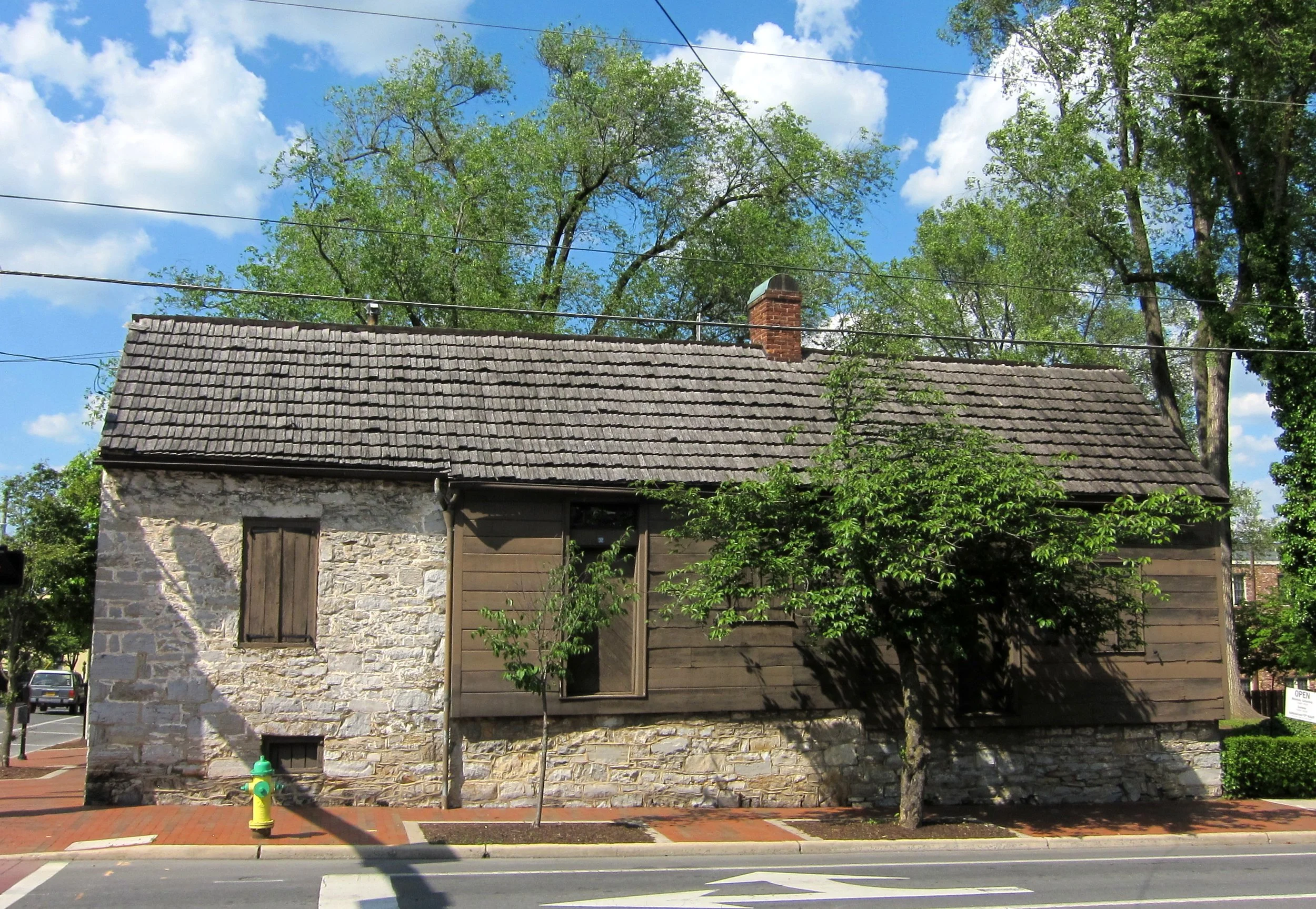
George Washington’s Office.
Photo by AgnosticPreachersKid, licensed under CC BY-SA 4.0.
Note: During the Revolutionary War, Washington lived in dozens of taverns, tents, and homes. The following four sites represent locations where he resided for "roughly a season or longer" (multi-month winter encampments) and functioned as his established political and military homes.
George Washington’s Office
George Washington’s Office in Winchester, Virginia, is a small log and stone building that served as Washington’s combined headquarters and residence during his early military career on the colonial frontier.
Address: 32 W Cork St, Winchester, VA 22601
Status: Open to the public; historic structure operated as a museum.
Residence dates: 1755–1756.
Hours: Typically April–October, daily 10:00 AM–4:00 PM (shorter winter season and closures in colder months).
Admission: About $5 for adults.
While commanding the Virginia Regiment during the French and Indian War, Washington used this building in Winchester as his headquarters and home while supervising the construction of nearby Fort Loudoun. Today the structure, often called the Adam Kurtz House, is preserved by the Winchester‑Frederick County Historical Society as a small museum interpreting his early military service.
Resources: Official Website | Historical Marker Database
Visited: No.
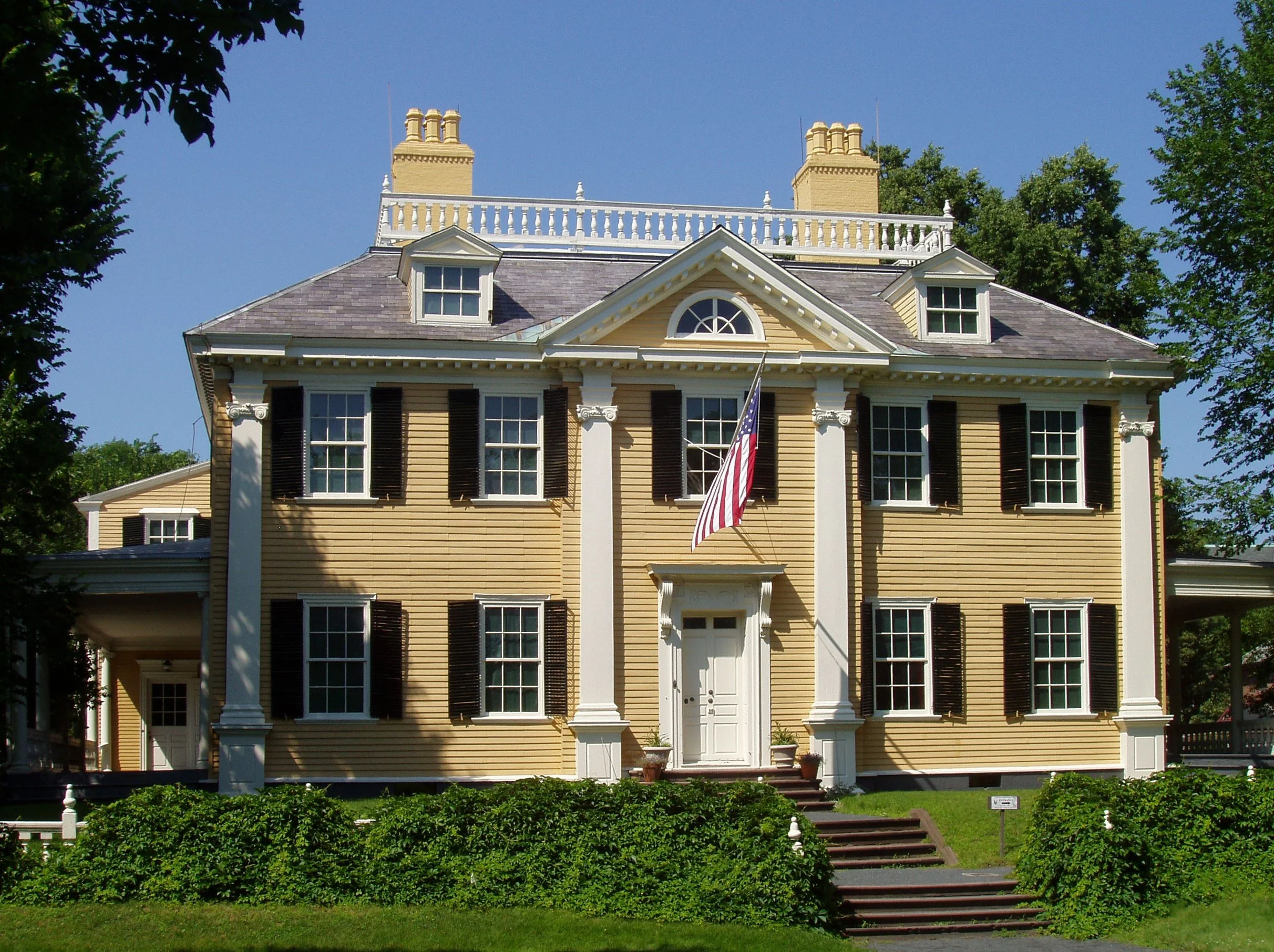
Washington’s Headquarters in Cambridge.
Photo by Daderot, licensed under CC BY-SA 3.0.
Washington’s Headquarters (Longfellow House)
The Longfellow House–Washington’s Headquarters National Historic Site in Cambridge, Massachusetts, was Washington’s first major headquarters during the Revolutionary War.
Address: 105 Brattle St, Cambridge, MA 02138
Status: Open to the public as a National Park Service site.
Residence dates: July 1775–April 1776.
Hours: Typically May–October, Friday–Monday 9:30 AM–5:00 PM; grounds open daily (check NPS for current schedule).
Admission: Free.
Soon after taking command of the Continental Army, Washington occupied this Georgian mansion overlooking Cambridge as his headquarters during the Siege of Boston. He lived and worked here for about nine months, coordinating operations and hosting Martha for the winter; in the 19th century the house became famous again as the home of poet Henry Wadsworth Longfellow, and it is now preserved by the National Park Service.
Resources: Official Website | Historical Marker Database
Visited: No.
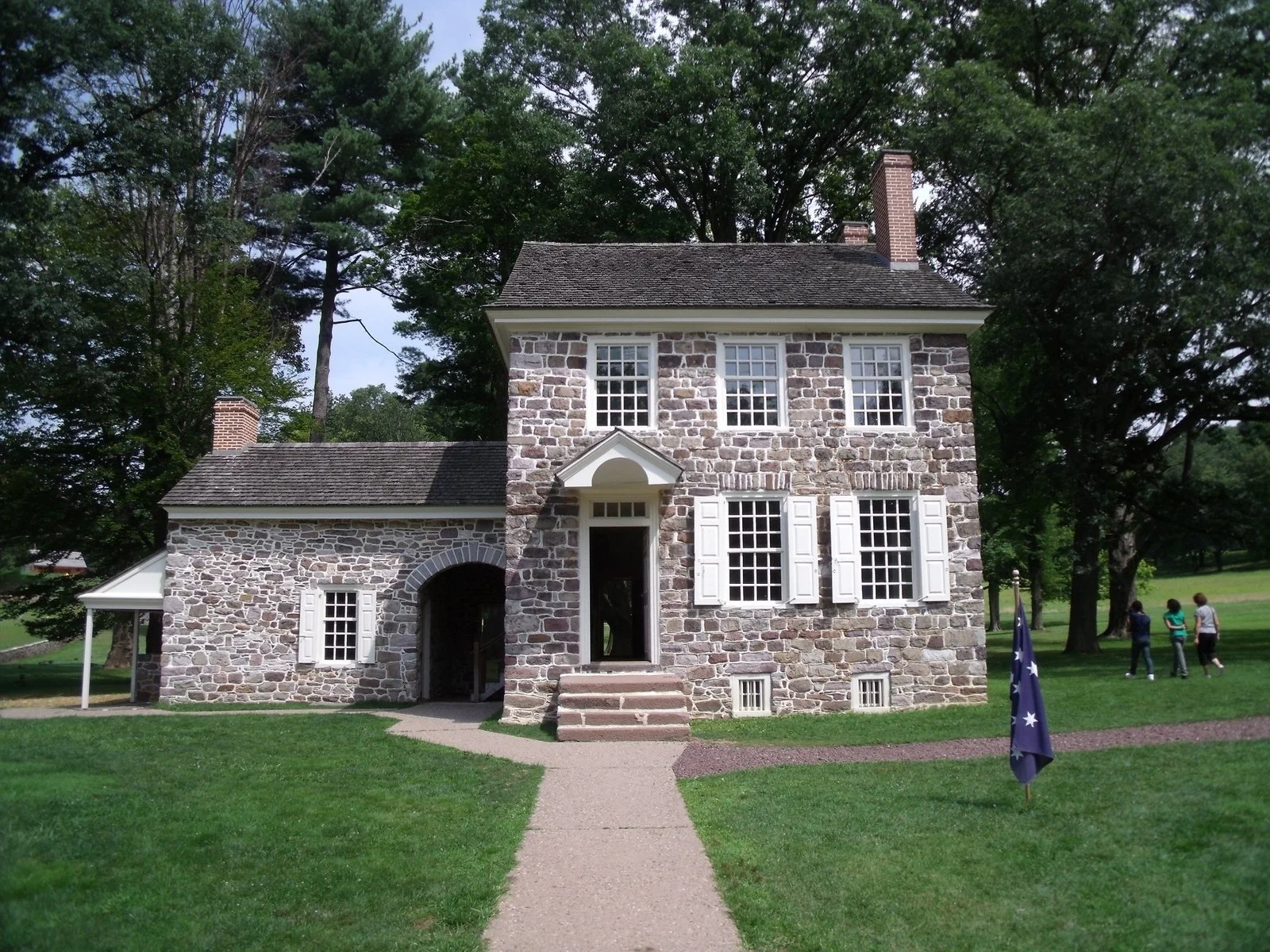
Washington Headquarters in Prussia.
Photo by Bernard Fisher of Richmond, Virginia, HMDB.org
Washington’s Headquarters (Isaac Potts House)
Washington’s Headquarters at Valley Forge, also known as the Isaac Potts House, was Washington’s home and command center during the harsh winter encampment of 1777–1778.
Status: Open to the public within Valley Forge National Historical Park.
Residence dates: December 1777–June 1778.
Hours: Washington’s Headquarters generally open daily, with seasonal hours (often 10:00 AM–5:00 PM in warmer months and reduced winter hours); check current NPS schedule.
Admission: Free (park entry and headquarters tours).
During the brutal winter at Valley Forge, Washington rented this small stone house from Quaker miller Isaac Potts to serve as both family quarters and military headquarters. He and Martha shared the cramped space with aides as they struggled to hold the Continental Army together; the building is preserved nearly to its 1777 appearance as part of the national historical park.
Resources: Official Website | Historical Marker Database
Visited: No.
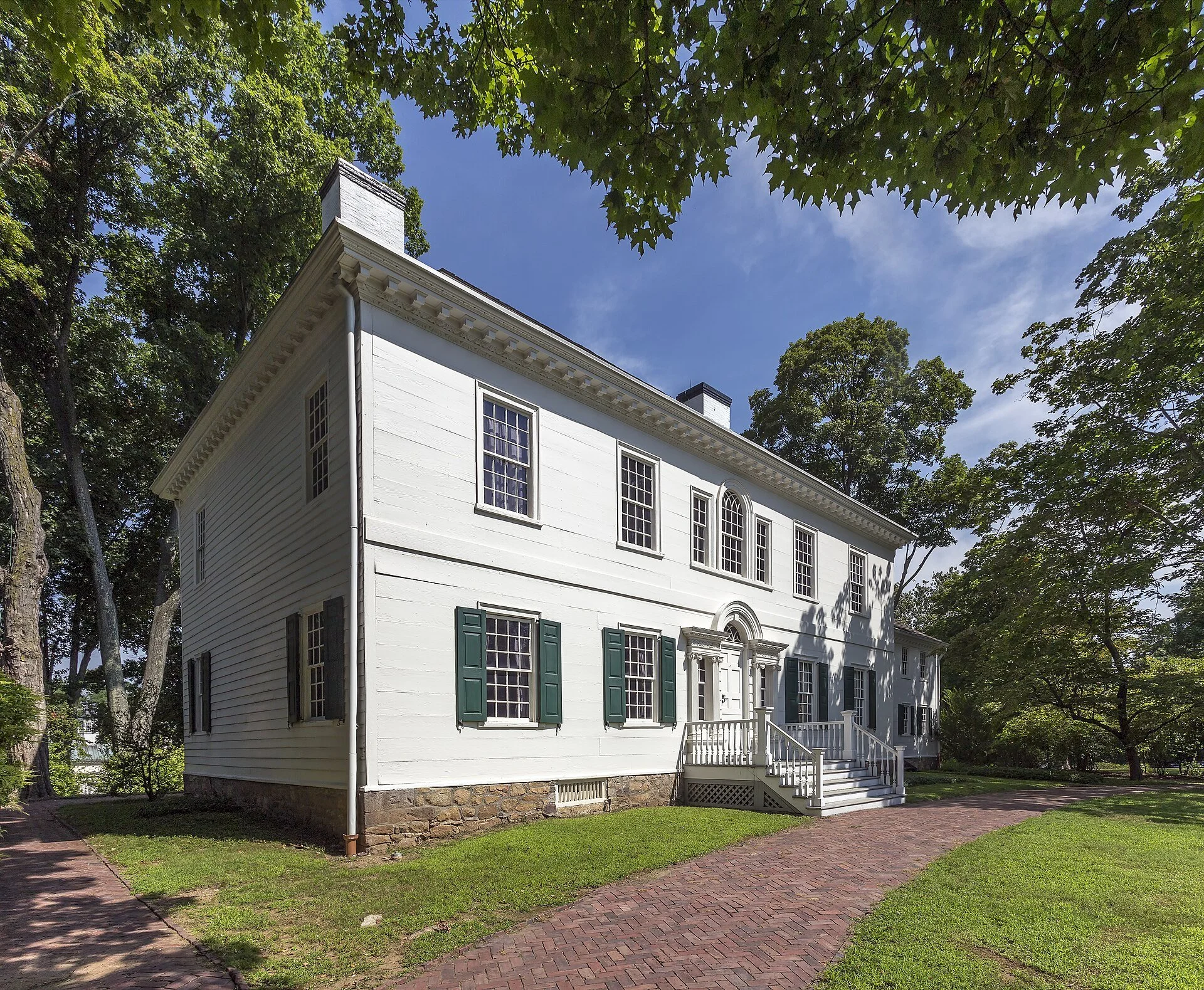
Ford Mansion in Morristown.
Photo by Acroterion, licensed under CC BY-SA 4.0.
Ford Mansion (Morristown National Historical Park)
Ford Mansion in Morristown, New Jersey, served as Washington’s headquarters and residence during the severe winter of 1779–1780.
Status: Open to the public as part of Morristown National Historical Park.
Residence dates: December 1779–June 1780.
Hours: Typically open for guided tours, with the mansion accessible Wednesday–Sunday and tickets issued from the adjacent museum; hours can vary seasonally.
Admission: Free.
Washington used the elegant Ford family home as his headquarters and lodging during another difficult winter encampment, while soldiers camped at nearby Jockey Hollow. The house and adjoining museum interpret the Morristown encampments and Washington’s wartime leadership; visitors usually join ranger‑guided tours to enter the mansion.
Resources: Official Website | Historical Marker Database
Visited: No.
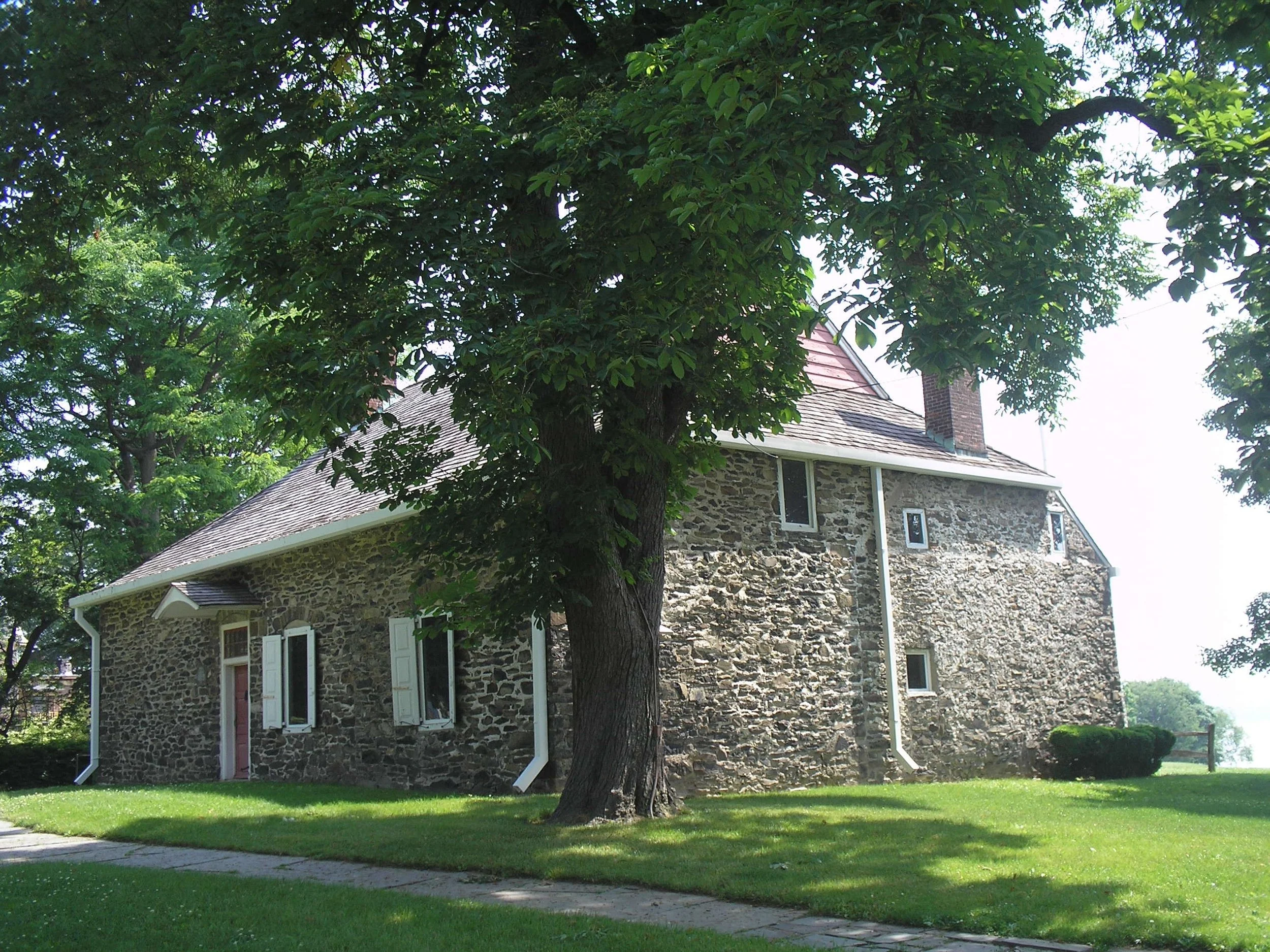
Washington Headquarters State Historic Site.
Photo by Bill Coughlin of Woodland Park, New Jersey, HMDB.org
Washington’s Headquarters State Historic Site (Hasbrouck House)
Washington’s Headquarters State Historic Site in Newburgh, New York—centered on the Hasbrouck House—was Washington’s longest‑used Revolutionary War headquarters.
Address: 84 Liberty St, Newburgh, NY 12550
Status: Open to the public as a New York State historic site.
Residence dates: April 1782–August 1783.
Hours: Mid‑April–October: Wed–Sat 11:00 AM–5:00 PM, Sun 1:00 PM–5:00 PM (hours may change seasonally).
Admission: About $7 for adults and $5 for seniors/students.
Washington lived here for over 16 months as the war drew to a close, making critical decisions about ending military operations and establishing peacetime norms. From this farmhouse he confronted the Newburgh Conspiracy, created the Badge of Military Merit (a forerunner of the Purple Heart), and issued orders that helped transition the army to peace; in 1850 New York acquired the site, making it the nation’s first publicly owned historic house museum.
Resources: Official Website | Historical Marker Database
Visited: No.
Adult Residences: Political Life
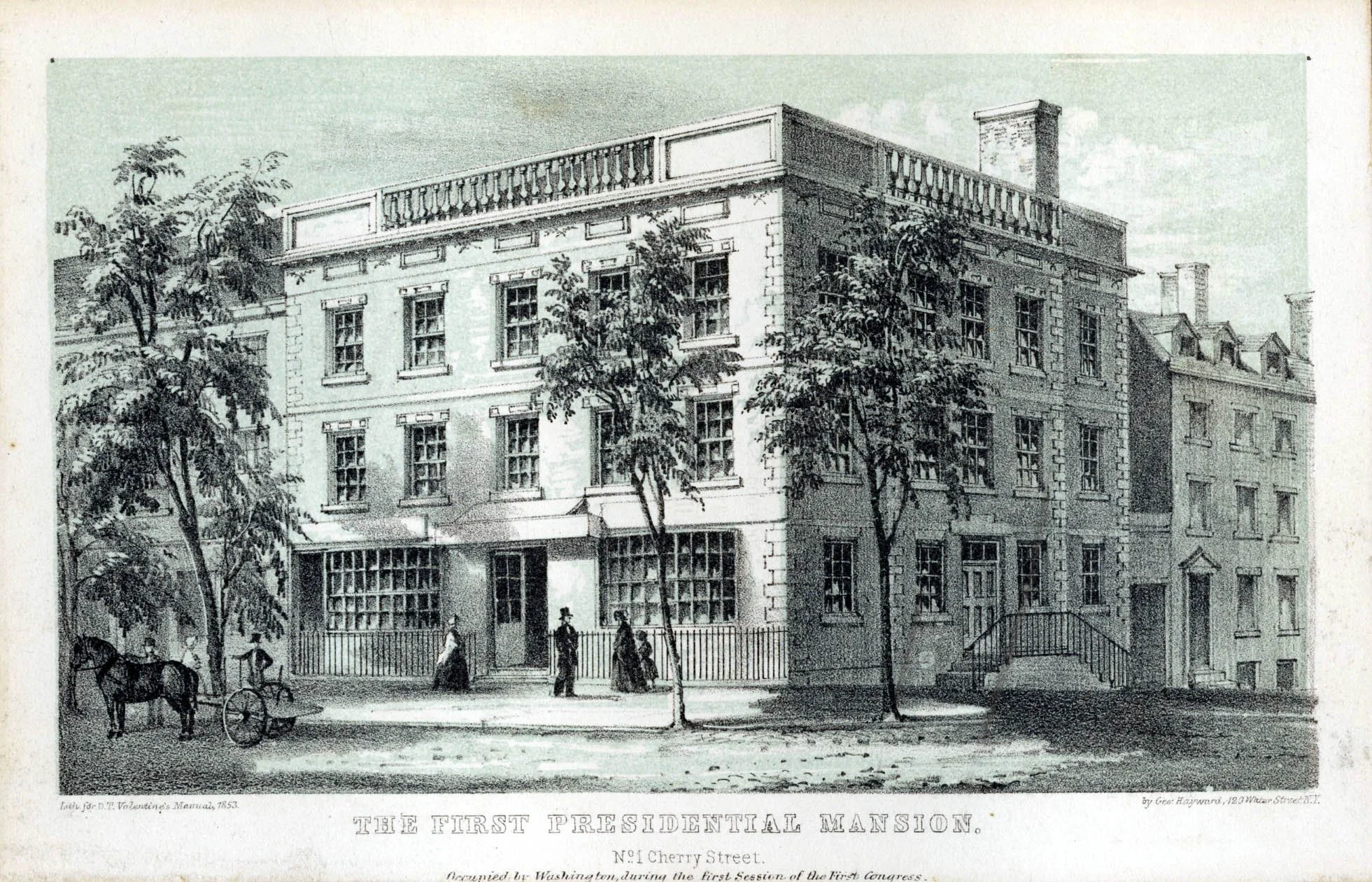
"The First Presidential Mansion."
Lithograph by George Hayward, 1853.
Note: Washington eight years as president pre-date the construction of the White House in Washington D.C. He lived at two places when the nation's capital was New York, then two places when the capital moved to Philadelphia, Pennsylvania. He would never reside in Washington D.C.
First Presidential Mansion: Samuel Osgood House
The Samuel Osgood House on Cherry Street in New York City served as the first presidential mansion when Washington took office in 1789.
Location: Lower Manhattan, New York, NY (Marker)
Status: Demolished; commemorated by a plaque near the Brooklyn Bridge anchorage.
Residence dates: April 1789–February 1790.
While New York was the nation’s first capital, Washington leased this three‑story brick house to serve as his official residence and the seat of the new executive branch. Here he hosted formal receptions, established patterns of presidential etiquette, and oversaw the earliest operations of the federal government before moving to a larger house on Broadway; the building was demolished in 1856 and its footprint lies beneath modern infrastructure.
Resources: Historical Marker Database | Wikipedia
Visited: No.
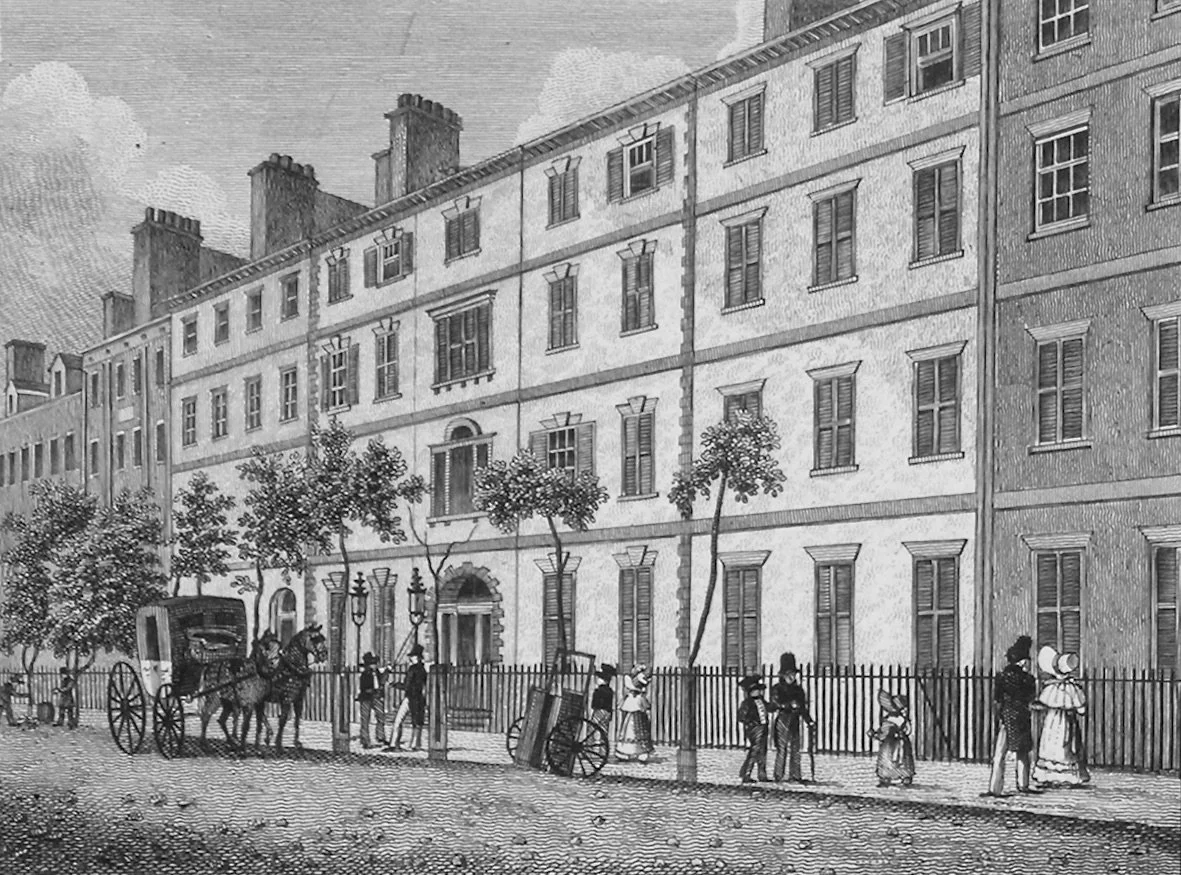
The Alexander McComb House.
Drawn by Burton, Engraved by Archer, 1831.
Second Presidential Mansion: Alexander McComb (Macomb) House
The Alexander McComb (Macomb) Mansion on Broadway was Washington’s second presidential residence in New York and his last before the capital moved to Philadelphia.
Address: 39 Broadway, New York, NY 10006 (Marker)
Status: Demolished; site marked near lower Broadway.
Residence dates: February–August 1790.
Needing more space than the Cherry Street house, Washington moved his household to this larger four‑story mansion overlooking Bowling Green. He lived here for about six months during a crucial period of early federal governance, until Congress decided to relocate the capital to Philadelphia; the original house was demolished in the 19th century, and today the site is occupied by commercial buildings.
Resources: Historical Marker Database | Wikipedia
Visited: No.

“The House intended for the President of the United States, in Ninth Street Philadelphia”
Drawing By William Russell Birch - Birch's Views of Philadelphia (1800), Public Domain.
President’s House Site
The President’s House Site in Philadelphia marks the location where Washington lived and governed for most of his presidency, while also confronting the reality of enslaved labor within the new republic.
Status: Original structure demolished; open‑air memorial and framework exhibit.
Residence dates: November 1790–March 1797.
Hours: Open daily, roughly 7:00 AM–10:00 PM year‑round.
Admission: Free.
From this three‑story brick mansion near Independence Hall, Washington oversaw national policy, international crises, and the daily work of the executive branch. The house also functioned as a city residence for the enslaved people the Washingtons brought to Philadelphia, making the site an important place to explore the contradictions between liberty and slavery; the original structure was demolished in the 19th century, and the National Park Service now maintains an interpretive exhibit on its footprint.
Resources: Official Website | Historical Marker Database
Visited: No.
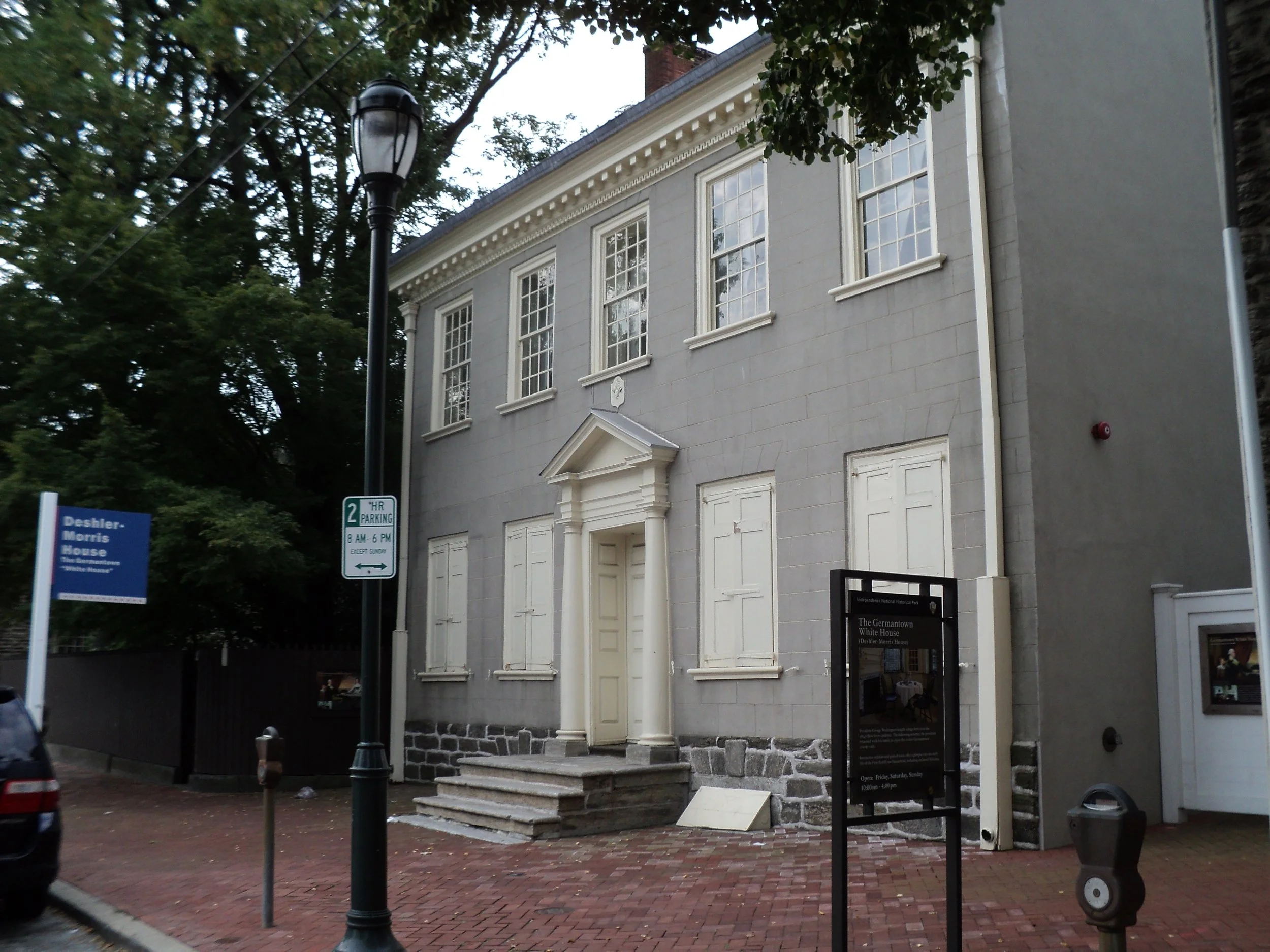
The Germantown White House.
Photo by Bill Coughlin of Woodland Park, New Jersey, HMDB.org
Germantown White House (Deshler-Morris House)
The Germantown White House in Philadelphia, also called the Deshler–Morris House, served as a temporary presidential residence during a health crisis and later summer retreats.
Status: Open to the public but currently closed for major structural renovations; check NPS for updates.
Residence dates: October–November 1793 and summer 1794.
Hours: When open, hours and tour times vary; see the NPS page for current schedule and closures.
Admission: Free when open.
During the 1793 yellow fever epidemic in Philadelphia, Washington moved his family and cabinet to this country house in Germantown to escape the disease. He returned the following summer to avoid the city’s heat, helping establish the idea of a “summer White House”; the house is one of the oldest surviving presidential residences and is jointly managed by the National Park Service and local partners.
Resources: Official Website | Historical Marker Database
Visited: No.
End of Life: Death & Burial Sites
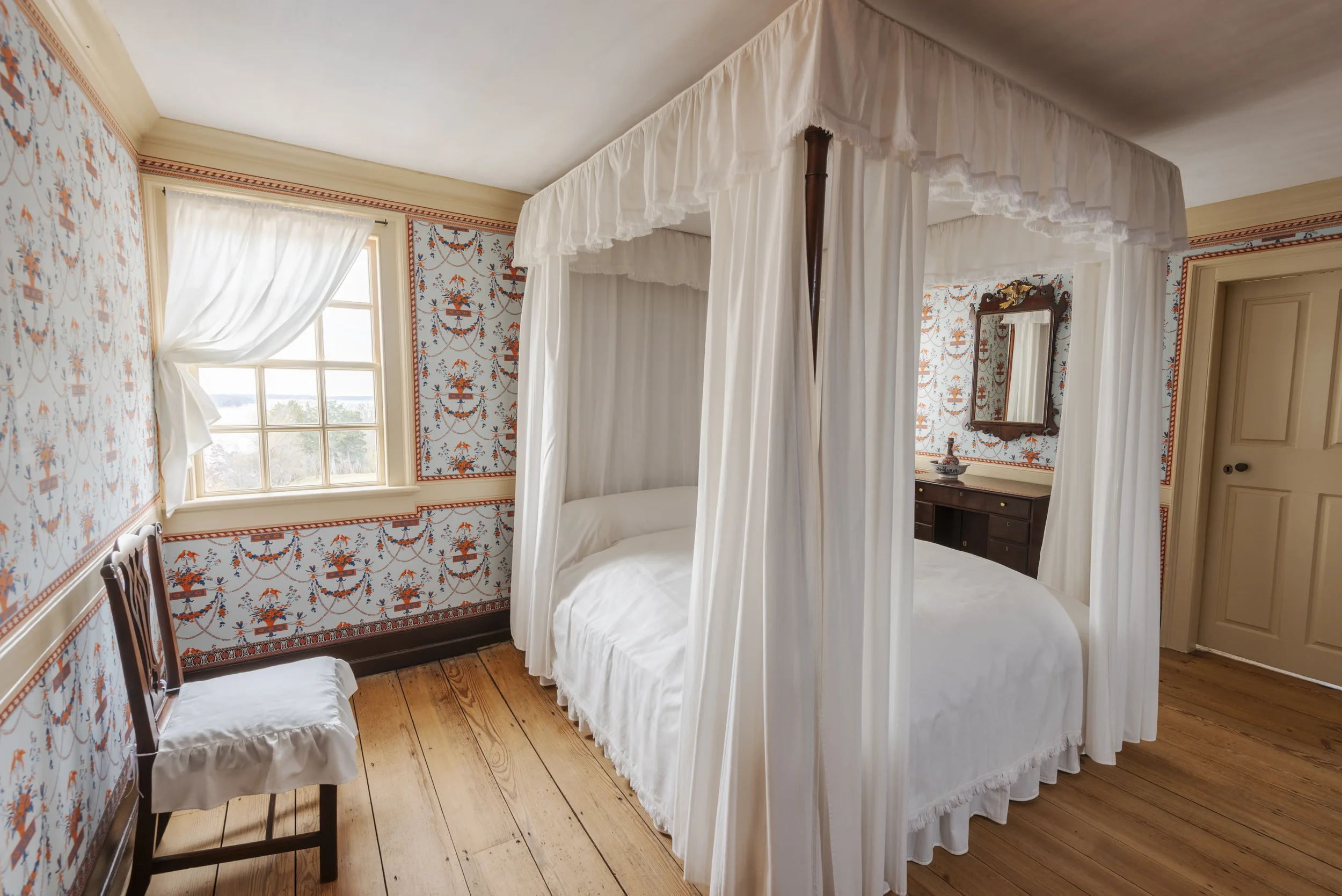
The Washingtons' Bedchamber, 2025. (George Brown / MVLA)
Place of Death: Bedchamber at Mount Vernon
Washington’s deathbed is located in the second‑floor bedchamber of the Mount Vernon mansion, a key stop on the standard house tour.
Address: 3200 Mount Vernon Memorial Hwy, Mount Vernon, VA 22121
Status: Open to the public as part of the mansion tour.
Date of death: December 14, 1799.
Hours: Mansion accessible during regular Mount Vernon hours (9:00 AM–5:00 PM April–October; 9:00 AM–4:00 PM November–March).
Admission: Included with Mount Vernon admission; timed tickets required.
In December 1799, after riding in freezing rain and developing a severe throat infection, Washington died in this chamber surrounded by Martha, enslaved attendants, and physicians. The room now appears much as it did at the time of his death, with period furnishings, low light, and interpretive signage that makes it one of the most solemn spaces at Mount Vernon.
Resources: Official Website
Visited: Yes, in 2013.
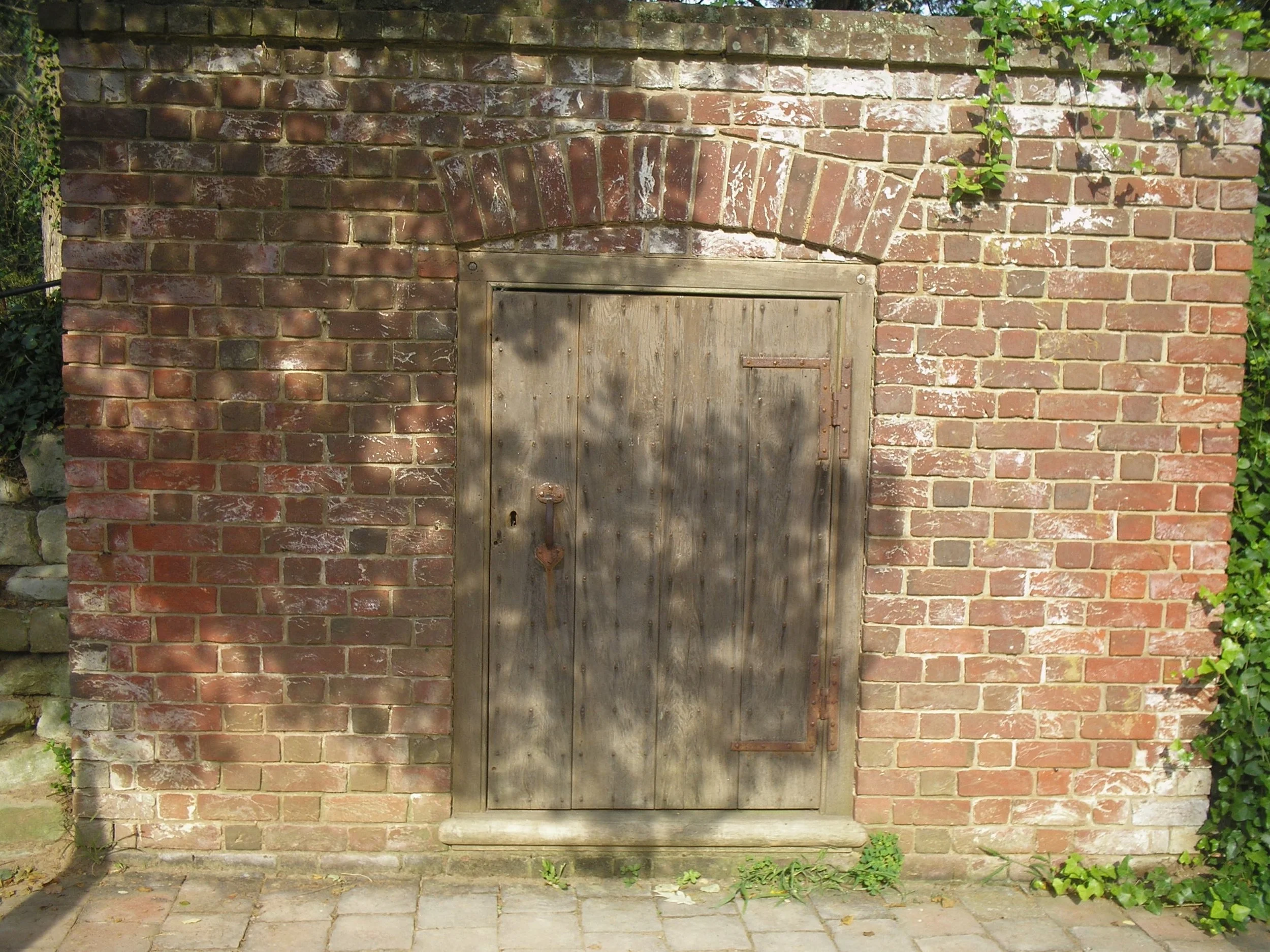
The first burial site of the Washingtons: the Old Vault.
Photo by Bill Coughlin of Woodland Park, New Jersey, HMDB.org
First Burial: Old Vault at Mount Vernon
The Old Tomb at Mount Vernon was Washington’s initial burial place before his remains were moved to a new vault in the 19th century.
Location: Old vault site near the modern tomb at Mount Vernon.
Status: Open to the public as part of the estate grounds.
First interment: December 18, 1799.
Hours: Accessible during general Mount Vernon hours (9:00 AM–5:00 PM April–October; 9:00 AM–4:00 PM November–March).
Admission: Included with Mount Vernon admission; timed mansion tickets still apply for the broader visit.
After his death, Washington was initially laid to rest in the estate’s aging family vault, fulfilling immediate burial needs. His will called for the construction of a new brick tomb on the property, and in 1831 his remains were transferred there; visitors today can see the old vault site as part of the broader burial landscape.
Resources: Official Website | Historical Marker Database
Visited: Yes, in 2013.
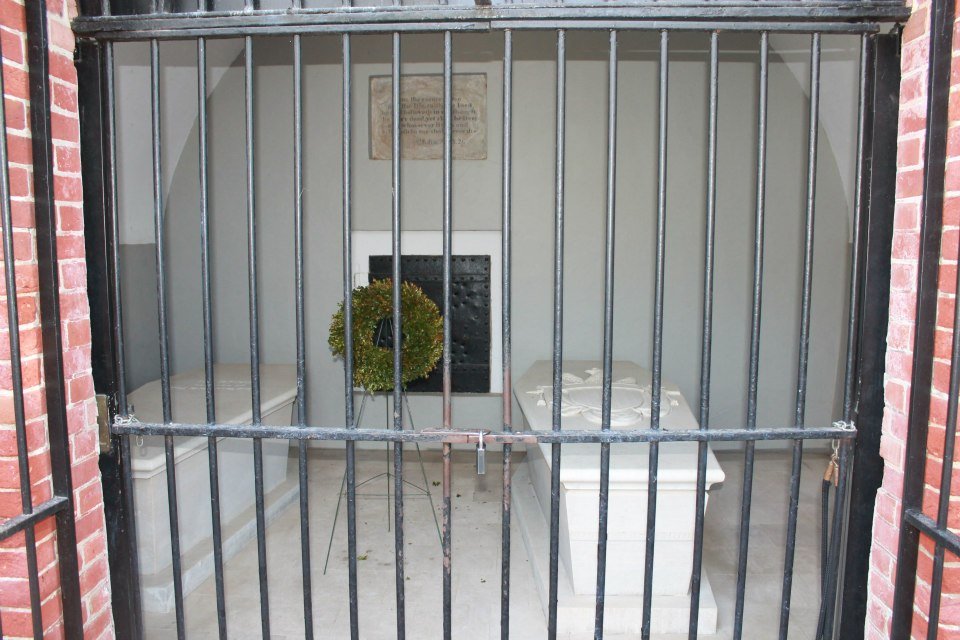
The final resting place of George and Martha Washington in the "New" tomb.
Photo by Zach Anderson (2013).
Final Resting Place: New Washington Tomb
The New Tomb at Mount Vernon is Washington’s final resting place and the main site where visitors pay their respects today.
Location: New brick tomb on the Mount Vernon grounds near the original vault.
Status: Open to the public.
Key dates: Remains moved in 1831; final reinterment completed by 1837.
Hours: Accessible during regular Mount Vernon estate hours (9:00 AM–5:00 PM April–October; 9:00 AM–4:00 PM November–March).
Admission: Included with Mount Vernon admission; no separate ticket required.
In accordance with Washington’s will, a new brick vault was built at Mount Vernon and his remains were relocated there in the early 19th century, along with Martha’s and other family members’. The New Tomb, with its iron gates and brick façade, now serves as the primary memorial and is a focal point of many tours, wreath‑laying ceremonies, and commemorations.
Resources: Official Website | Historical Marker Database
Visited: Yes, in 2013.